Relationships

Building strong stakeholder relationships

Open and respectful relationships with our stakeholders are vital, especially during this period of significant transformation for the energy industry.

Supporting communities and maintaining strong partnerships

AGL is committed to making a positive social, economic and environmental contribution to the communities in which we operate.

It’s important to us that we build trust with our stakeholders by engaging openly with them on relevant issues and by having them recognise we consider their views in our decision-making.

Many parts of the community are interested in the decisions we make, while others play a role in influencing the frameworks through which we make our decisions. These include local communities, Traditional Custodians, First Nations organisations, governments, regulators, the energy industry and industry associations, non-government organisations and advocacy groups, suppliers, project partners, and lenders and investors.

Engaged and supported communities

We invest in the communities in which we operate through a structured program of community investment that is guided by our Social Impact Framework pillars, investing in initiatives that support our social licence priorities.

Community icon Community icon

Local community engagement

We have ongoing engagement with the communities in which we operate through well-established forums such as Community Consultative Committees (CCCs) and Community Dialogue Groups (CDGs). For proposed new projects, we develop a tailored and comprehensive community engagement strategy to deliver meaningful and continual engagement with local community stakeholders and Traditional Custodians in the proposed project location.


We are committed to enabling local communities to share in the value created by our projects, enhancing social and economic outcomes for the regions in which we operate. We design benefit sharing arrangements in consultation with local communities to reflect local priorities, community expectations and AGL's Social Impact Framework. Through this approach, AGL seeks to create shared value, strengthen community capacity and deliver lasting positive outcomes beyond the construction and operation of our projects.

Heart in hand icon Heart in hand icon

First Nations empowerment

Building strong, respectful and trusted relationships with First Nations stakeholders and Traditional Custodians is fundamental to AGL's success and energy transition. Through meaningful engagement, partnership and cultural learning, we aim to protect cultural heritage, support self-determination, create shared economic opportunities, and ensure First Nations perspectives help shape our decisions. By strengthening these relationships, we contribute to better outcomes for communities, our business and Australia's energy future.


We seek to support benefit sharing and create employment and procurement opportunities that enable First Nations peoples and communities to share in the opportunities arising from our existing operations and new energy projects. By strengthening these relationships, we aim to contribute to better outcomes for communities, our business and Australia's energy future.


AGL is committed to contributing to reconciliation with First Nations communities and our Reconciliation Action Plan (PDF) outlines the progress we have made to date and the commitments that will guide our ongoing reconciliation journey.

Desktop monitor icon Desktop monitor icon

Community partnerships and funding

AGL’s Social Impact Framework guides how we invest in communities where we operate by providing a strategic approach to social investment that supports our business strategy. The Framework directs funding towards long-term partnerships and programs that can deliver measurable and lasting outcomes for communities where we operate. This approach reflects our shift from being a “cheque writer” to a “change maker”, with investment concentrated in areas where AGL can create the greatest social value while supporting communities through change.


The Framework prioritises investment across four pillars:

  • Thriving Communities – supporting education programs and local economic development initiatives.
  • Climate & Environment – investing in electrification, solar and battery storage for community groups and biodiversity conservation programs.
  • Cost-of-Living – supporting organisations that help people meet essential needs and navigate cost of living pressures.
  • First Nations Empowerment – investing in programs improving education outcomes and economic participation.


In addition to our long-term strategic partnerships, we offer grants through our Community Grants Programs (PDF) throughout the year in communities 

Our commitment to the community

AGL will engage with the community stakeholders of its existing operating assets and those of future proposed projects with the aim of understanding the communities’ expectations and aspirations for creating positive long-lasting social, economic and environmental impact.

Throughout the life of our projects and operations AGL will:

  • Embrace the uniqueness of our communities. We will approach each project and stakeholder interaction as a unique undertaking.
  • Be proactive. We will engage with our communities early and often, so that we understand and respond to their interests and concerns.
  • Be flexible and inclusive. We will offer a range of engagement opportunities that are tailored to the variety of needs and preferences of the communities in which we operate.
  • Be transparent. We will act honestly and ethically in all our dealings with the communities in which we operate.
  • Be responsive: We will respect community input and ensure that community feedback is taken into consideration and responded to appropriately.
  • Act as a good neighbour. We will establish long-term relationships and earn the trust of local communities we operate in to become an integral part of them.

Engagement with Traditional Custodians and First Nations Communities

AGL acknowledges the importance of the relationship between First Nations peoples and their lands where we operate. Our engagement with First Nations communities will seek to uphold the core principles of self-determination, respect for and protection of culture, and Free, Prior and Informed Consent (FPIC) recognised in the United Nations Declaration on the Rights of Indigenous Peoples.

AGL will engage proactively with Traditional Custodian groups and First Nations’ communities to develop relationships, based on cultural respect and collaboration with the aim of creating sustainable opportunities for employment, economic participation and care for country.

See our Community Engagement Policy that guides our engagement for more information (PDF).

Responsible lobbying and stakeholder engagement

Active engagement and collaboration between industry, government and the community are critical for achieving a successful transition to a lower carbon future. 

AGL is committed to conducting all its direct and indirect policy engagement activities in a responsible, consistent and transparent manner, encompassing environmental, social and governance considerations. This applies across all AGL’s subsidiaries and operational jurisdictions.

Our policy engagement and lobbying activities include, but are not limited to: submissions to government and regulatory body consultations, meetings with government and peak industry body officials, engagement with industry associations, and media publications and interviews.   

AGL advocates for a responsible transition that balances energy reliability and affordability with the need to decarbonise. We support the objectives of the Paris Agreement and continue to seek to advocate for Paris-aligned policy action through all direct and indirect policy engagement and lobbying.

  • For more information on our industry association membership fees and review of our Industry Associations memberships, please visit the ESG Data Centre
  • For information on AGL’s positions on climate-related policy, see our public policy submissions and visit the ESG Data Centre
  • AGL’s approach to joining and maintaining memberships of Industry Association is outlined in our Industry Association Membership Policy (PDF)
  • AGL’s ambitions, commitments and targets related to decarbonisation are outlined in its latest Climate Transition Action Plan (CTAP)
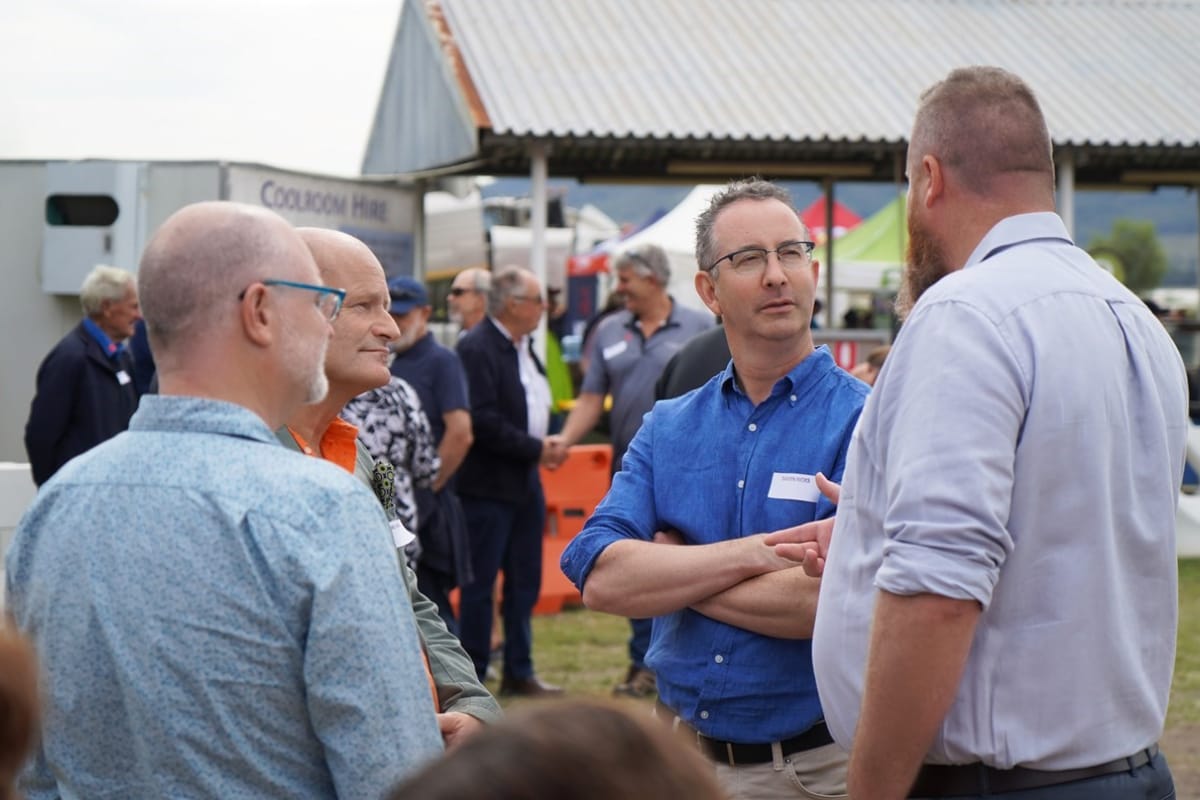
Damien Nicks and the executive team meeting with the local member for the Hunter region. Hunter community discussion

We will

  • Publish submissions made to official government processes on our website (excluding those containing commercially sensitive information)
  • Monitor the policy positions and public advocacy in relation to climate change of industry associations of which we are a member, and will annually disclose memberships, membership fees, and areas where AGL's position on climate change differs materially from the associations of which we are a member, in accordance with our Industry Association Membership Policy.
  • Provide a summary of AGL's position on climate-related policies along with examples of where we have advocated for these.
Cross icon with circle Cross icon with circle

We won't

  • Undertake any lobbying that is inconsistent with disclosed advocacy positions.
  • Make any monetary or in-kind political donations to political parties, either directly or through third parties, in accordance with our Political Donations PolicyProvide a summary of AGL's position on climate-related policies along with examples of where we have advocated for these.
  • Provide funding or support to organisations or groups that spread climate misinformation and/or actively lobby against climate action.
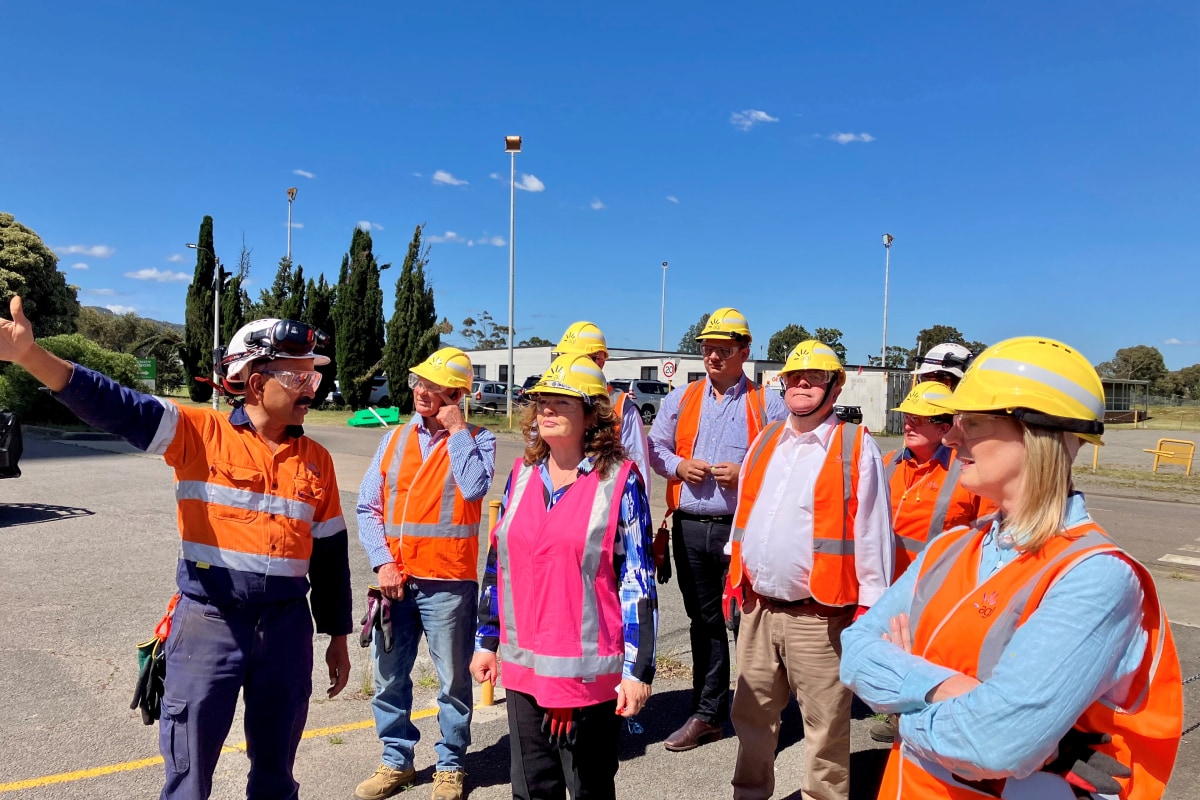
people in high vis working

Best Practice Charter Report

As a member of the Clean Energy Council, we publish a bi-annual report which discloses how we’re engaging respectfully with the communities in which we operate, including First Nations communities, being sensitive to environmental and cultural values, minimising impact on agriculture, prioritising co-land use, and making a positive contribution.

Read how we’re meeting our commitments under the Clean Energy Council’s Best Practice Charter for Renewable Energy Projects.

AGL FY25 Signatory Annual report.

Strong business relationships

Our relationships with suppliers, project partners and financial institutions remain foundational to our ability to deliver on Australia’s energy transition.

Shared values and commitments

Our Supplier Code of Conduct governs our procurement practices with a key focus on engaging with suppliers that share similar values and commitments as AGL, while also supporting our suppliers to manage the environmental, social and governance (ESG) impacts of the goods and services they supply to us.

Responsible procurement

Responsible procurement is a core principle of AGL’s Procurement Policy, which guides our processes and decision-making on how we increase our engagement with First Nations-owned businesses and small, local and social enterprises across the regions in which AGL operates. We’ve partnered with multiple social industry organisations to further our engagement in these sectors.

Upholding and respecting human rights

As outlined in our Human Rights Policy, AGL respects the dignity and human rights of all people and upholds internationally recognised human rights including those set out in the International Bill of Human Rights and the International Labour Organisation’s Declaration on Fundamental Principles and Rights at Work. We conduct our business in a manner consistent with the UN Guiding Principles on Business and Human Rights and the UN Global Compact’s 10 Principles. 

Our stories

Helping our community partners to decarbonise  

Through our 'Powering our Community' program, we provide funding to help community organisations manage energy costs and participate in the energy transition. This includes supporting partners such as OzHarvest, Hunter Valley Aboriginal Corporation and Aussie Ark to install solar battery systems that can reduce their energy costs allowing more resources to be directed towards delivering community services and local impact.

We have also supported practical initiatives that help organisations adapt to changing energy and transport systems. For example, funding for an electric vehicle subscription has helped OzHarvest rescue and deliver food to people in need while reducing operating costs associated with its transport fleet. Through programs like these, we help community partners build capability, reduce costs and strengthen their ability to continue delivering important services to the communities they support.

Through our ongoing partnership with the Gippsland Climate Change Network (GCCN), we have supported the delivery of community owned electric vehicle charging infrastructure in Gippsland, as well as education initiatives that help households and businesses better understand electrification and renewable energy.

Our relationship policies