Powering Australian communities through more accessible electric vehicle charging
– Jane Butler, General Manager Electrification and Innovation, AGL.
Australia’s third-largest source of greenhouse gas emissions, transport,1 has a role to play in the energy transition. Switching from petrol and diesel vehicles to electric vehicles (EVs) is a practical way to help reduce emissions as renewable energy grows. And the transition is gaining momentum: in August 2026, EV sales overtook petrol cars for the first time in Australia, with more than 27,000 battery electric vehicles sold, representing 24.9% of all new vehicle sales and setting a new monthly record. Overall, EV sales were up 171% compared with the same month last year.2
For customers and communities, the benefits extend beyond lower emissions. EVs can be cheaper to run and maintain over the lifetime of the vehicle, while also helping to improve air quality and reduce noise pollution in the places where people live and work.
EVs can also play a bigger role in the electricity system. Recently, we launched our vehicle-to-grid trial which will test how EV owners can use surplus energy in their car battery to power their own home or opt to sell it to the grid. EVs can also potentially be used as a mechanism for storing electricity and supporting homes during outages. With smart charging, EV owners can charge their EV battery when renewable energy is abundant or energy prices are lower, helping make better use of the grid.
As more Australians make the shift, access to convenient and reliable charging is becoming essential. AGL is helping make it easier by expanding access to charging at home, on the road and in local communities, supporting customers with charging that is easy to find, simple to use and competitively priced. By bringing together charging at home and at work, public charging and smart energy solutions, we’re helping remove barriers to EV ownership, encouraging charging when electricity supply is high, and supporting the shift to a cleaner energy future.
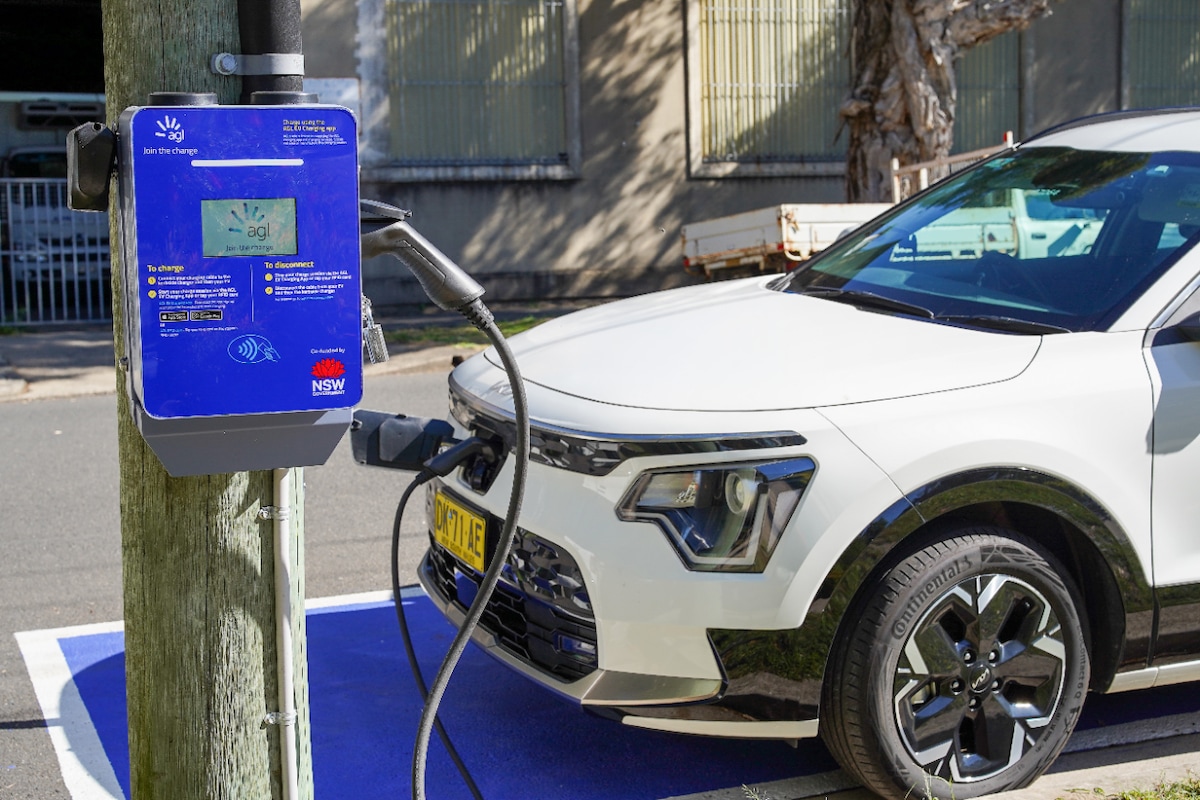
We’re working with governments, councils, and industry and community partners to expand access where charging is needed, investing in communities to build infrastructure and support them through the energy transition. In 2024, AGL announced a project with PLUS ES and the NSW Government to install 149 public charging poles across the state, with an initial focus on high-density suburbs in inner Sydney where access to off-street parking was limited. In 2026, we expanded this to install a further 107 public chargers across 11 councils, including Cumberland, Sutherland Shire and Newcastle, with almost all chargers supported by dedicated parking spaces. This brings the number of kerbside chargers to 256 and supports these communities with more accessible charging.
In 2025, we expanded our partnership with bp pulse to make on-the-go charging easier. The partnership gives AGL customers a discount of 6 cents per kilowatt hour off the standard retail price of EV charging at bp pulse stations across the country, once they register and create an account. Last Easter and Christmas holiday periods, we also offered 50% off fast charging at bp pulse locations during selected times of the day, helping customers plan their trips and access better value while travelling. Access to public charging remains one of the barriers we hear about from customers, which is why AGL has roaming partnerships with other charging networks, including Everty, Chargefox, Charge-at-Large and Eco-Movement. This means customers can find more charging options through these apps, and AGL chargers can also be discovered through partner networks.
In regional Victoria, we partnered with the Gippsland Climate Change Network helping improve local access to EV charging in places where people in our communities live, work and gather. Through a funding agreement, we supported the delivery of eight chargers: at Baw Baw Food Hub, Yarragon Uniting Church Hall, Lardner Park in Warragul, Gippsland Enterprise Centre in Churchill, GLaWAC Head Office at Kalimna, Morwell Innovation Centre, Tubbut Neighbourhood House, and Yallambee Village in Traralgon, one of the first EV chargers installed at an aged care facility in Gippsland. Investing in local charging infrastructure helps reduce range anxiety for EV owners, supports regional connectivity and gives drivers greater confidence to travel through Gippsland in an EV.
The response to our kerbside charging rollout has been overwhelmingly positive. For many residents in the communities where chargers have been installed, easier access to public charging is helping build confidence to make the switch to electric transport. Thousands of drivers now rely on these charging stations to keep their vehicles powered for everyday travel.
2 August vehicle market remains buoyant - FCAI, Chris Bowen, EV Sales Overtake Petrol Cars for the First Time (Media Release, Minister for Climate Change and Energy, 4 September 2026)