A practical guide to EV charging for Australian businesses

Cut through the complexity and keep your electrification plans moving.

Key Takeaways

  • With the right plan and the right partner, you can build charging solutions that work efficiently, sustainably and cost effectively.
  • For most light duty fleets, AC workplace charging is the most practical and cost-effective option.  
  • If your operations rely on quick turnarounds - like logistics, public charging or heavy-duty vehicles - DC fast charging delivers the speed you need.

Fleet refuelling has always been straightforward: pull up, top up, and get back to work. As more businesses switch to electric vehicles, that model is shifting. Charging speeds can vary. Site constraints matter. Different vehicles behave differently. And the terminology can feel overwhelming, even for organisations ready to electrify.

But transitioning to an electric fleet can be simplified. With the right plan and the right partner, you can build charging solutions that work efficiently, sustainably and cost effectively. It starts with understanding what really drives charging performance and designing an approach that fits the way your business operates.

Understanding what affects charging speed

EV chargers don’t deliver a single, universal ‘speed’. Charging depends on how a few key factors work together - the vehicle, the charger, your site electrical capacity and even the car battery’s charge state.

So even if the charging hardware can go faster, the vehicle might not be able to. Add in load management - important for protecting your switchboard and avoiding expensive upgrades or network tariff fees - and charging speeds naturally fluctuate.

DC charging is different again. It’s faster and well-suited to high turnover sites, logistics hubs and heavy vehicles. But the rated power (like 150 kW or 350 kW) doesn’t tell the whole story. Power may be shared across connectors, and battery charging curves slow down as the battery fills. The fastest charge always happens when the battery is low.

These aren’t downsides, just how EVs work. When planned for properly, they rarely get in the way of fleet operations.

Workplace charing for light vehicles

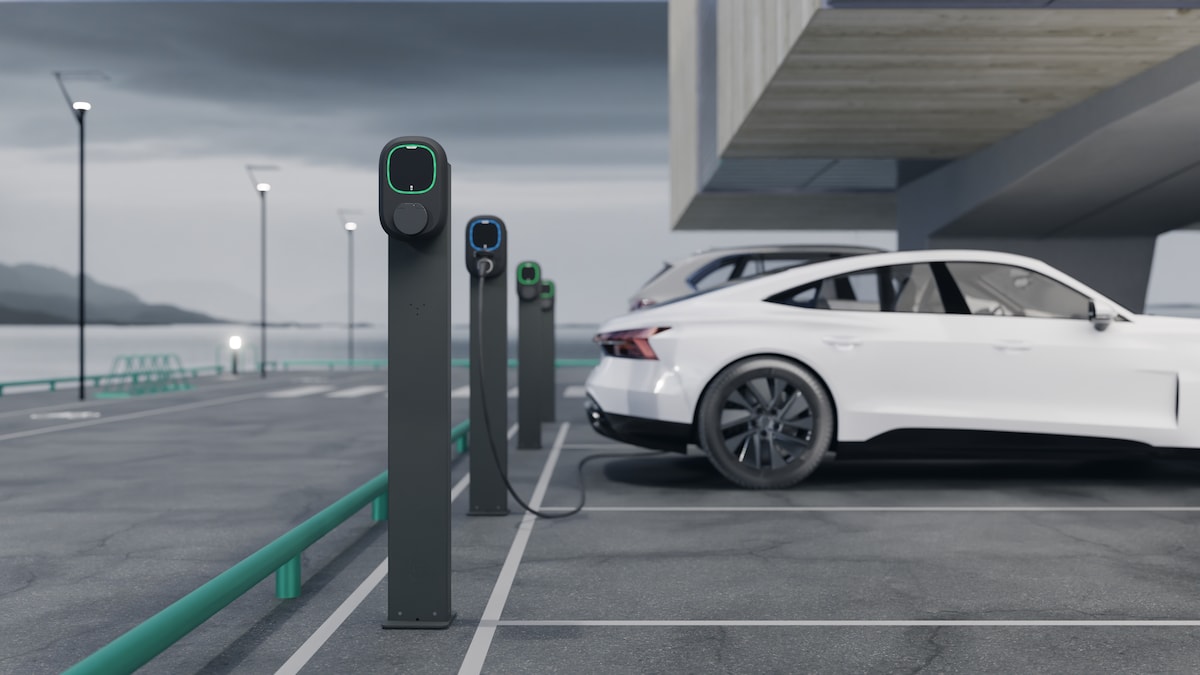
For most light duty fleets, AC workplace charging is the most practical and cost-effective option. Employees typically park for hours at a time, giving AC chargers more than enough time to replenish daily driving needs.

A well-planned AC setup brings together:

  • Multiple chargers spread across car parks
  • Single or three phase configurations to match your site
  • Load management to balance power safely
  • Smart throttling to protect infrastructure and maintain performance

The result is a flexible, scalable solution that supports your fleet today and grows with you.

Fast DC charging for on-the-go operations

If your operations rely on quick turnarounds - like logistics, public charging or heavy-duty vehicles - DC fast charging delivers the speed you need. Even with power sharing and natural battery tapering, a well engineered DC system can move vehicles through efficiently.

The key is designing the right capacity for your fleet profile, so you’re investing in the performance you actually need, without overspending on unnecessary electrical upgrades.

Why expert guidance matters

Every site and fleet is different. Daily usage, dwell times, duty cycles and operational constraints all play a role. The challenge isn't only installing chargers, it’s designing a system that works together seamlessly and allows for scaling.

AGL bring end-to-end capability across AC and DC charging for light and heavy fleets. From site assessments and engineering design to installation, optimisation and ongoing support, we help you make confident, informed decisions. You get infrastructure built around your needs, not a one-size-fits-all approach.

Electrification is a strategic advantage

Electrifying your fleet isn’t just about new vehicles. It’s a practical step towards lowering operating costs, reducing emissions and strengthening your long-term resilience. Understanding the nuances of EV charging helps you plan better, operate smarter and make the transition with ease.

Ready to optimise your EV charging infrastructure?

Get in touch and we’ll help you take the next step in your electrification journey.

Related articles